5 Productivity Tips for Law Firms – Make Time for What Matters!
With these 5 productivity tips, your law firm can start running like a well-oiled machine. By taking the time to get organised, setting deadlines, and communicating effectively, you’ll find that you have more time for the things that really matter—like winning new clients and growing your practice.

SpeechWrite at 20 – The Journey
As SpeechWrite marks its 20th year of providing digital dictation and voice recognition solutions to help organisations increase their efficiency, we look at how the company has evolved over the years. SpeechWrite specialises in providing agile working for legal and financial organisations, medical trusts, and GP practices across the UK.

How is the legal world adapting to remote working?
Coronavirus (officially known as Covid-19) is having a profound effect upon many facets of society and everyday life, not least in terms of how people work. A whole spate of companies around the world have already asked their office-based employees to work from home through the pandemic, starting with Silicon Valley giants including Google, Microsoft, Twitter, Apple and Amazon.
Home working tech solutions
Agile working – where fee earners and admin teams can work flexibly both in terms of location and time has never been as important as it is now. Here’s an introduction to some tech solutions that can be set up quickly and easily to enhance your remote working capabilities. SpeechWrite’s 360 mobile app brings the full benefits of our digital dictation and voice recognition workflow to mobile devices, providing maximum flexibility to our customers. Amongst other things, it allows you toHome working tech solutions Agile working – where fee earners and admin teams can work flexibly both in terms of location and time has never been as important as it is now. Here’s an introduction to some tech solutions that can be set up quickly and easily to enhance your remote working capabilities.

Improving the work-life balance for solicitors
According to the Employers Network for Equality and Inclusion (ENEI), when employees are given the autonomy and empowerment to choose when and where they work, this creates a culture that removes artificial measures of success (such as logged hours or constant visibility within an office) and actually allows employers to focus on what’s important - results and performance.

A solicitor’s guide to the top 10 do’s and don’ts of voice recognition
This solicitor's guide to the top 10 do's and don'ts of voice recognition software is a must read for anyone using this software. From memos, letters and emails, through to contracts and court forms – lawyers’ daily lives revolve around compiling documents. And in a profession where time is money, the more streamlined and intuitive this process is, the better.

Ringrose Law operates seamless remote working during Covid-19 using SpeechWrite 360 Mobile Cloud Solution
Ringrose Law provides legal advice and services throughout Lincolnshire and Newark. With five offices spanning the county, they provide personal and commercial law in various legal areas. Although the company was already using a legacy cloud dictation system with a mobile app, some distinct limitations led them to seek a more effective solution. This included not having a document audit trail and visibility of progress on the mobile device.

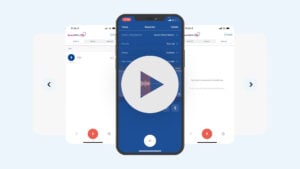
SpeechWrite 360 Mobile Digital Dictation App
SpeechWrite 360 is a state of the art cloud voice recognition and digital dictation workflow solution designed to meet the agile and flexible working needs of the modern-day professional. Here at SpeechWrite, we understand that our customers often need to work remotely and from multiple locations and do not want to be tied down to an office. In fact, many companies are now downsizing their offices or even closing them entirely to save on rental costs, which often means that employees need to be able to work from home or shared offices.

The effect of new technology on the legal sector
According to a report from The Law Society - Legal services sector forecasts 2017-2025 - growth in overall legal sector employment is likely to decline, partly as a result of “increasing adoption of new technology and new working methods”. Predictions are that “modest growth in the UK economy and the increasing use of labour saving technology and new working methods in the sector, mean that total employment in the sector is unlikely to grow at the rates we have seen in the past.

SpeechWrite Digital partners with The Agile Firm Events this Autumn
SpeechWrite are proud to be partners of the Agile Firm Events 2019 held in Bristol, Manchester and London this Autumn partnering with hosts DMC Canotec and Claremont. With 90 firms joining us at the events already you should register now to ensure your place and hear first-hand how some of the UK’s most visionary and progressive firms are embracing agile working to improve client service.

5G rollout – a boon for remote workers?
The much vaunted fifth-generation mobile network (5G) has finally arrived in the UK, to some fanfare. It doesn’t seem that long since 4G was launched and many (particularly rural) areas still lack coverage of this current standard. Nevertheless, progress marches on and the next generation is gradually being rolled out in selected cities by the various network operators; EE (owned by BT) was the first to launch, but Vodafone and Three are hot on their heels, with switch-on dates planned for July and August respectively.

Artificial Intelligence and the legal industry (2/2)
While we’re years away from truly autonomous forms of law firm Artificial Intelligence (the type of ‘strong’ AI Sofia the robot represents an early step towards), weaker or ‘narrow’ AI is already enhancing our lives. Google is probably the most advanced and ubiquitous form of AI we’re familiar with – using natural language processes to interpret users’ search queries (spelling mistakes and all) in order to retrieve the most relevant results.